Retirement Success

Baby Boomers (born 1946 onwards to 1965) are either working full or part time, fully retired or in the process of retiring…depending on their circumstances or goals.
Tom worked as a banker for years and now, in his mid 60s, is happily working at a brewery. Others in his generation enjoy their longstanding careers, but retirement is in their thoughts and plans.
Successful retirees seem to have a formula they follows, a formula which is unique to each person wbut with some overlap in common. For instance, many who enjoy good health travel several times a year. Cruises suit some and others prefer walking tours.
Adjusting to not working can be challenging, as the initial novelty initially wears off and a variety of feelings start to surface. the Boomer generation was never taught how to openly manage emotions, and the arrival of these feelings can be intimidating. As mentioned in “Boomer Upgrade,” accepting emotions and sharing them can be liberating. Talking them over or writing them down can have immediate benefits.
Healthy retirees create new structure in their daily lives. Simple tasks can become a comfortable daily routine, along with chores, reading, walking or regular commitments of various types. Structure existed in our work lives and offers the same benefit for those of us leaving the workforce.
Movement is crucial for physical and mental health. Walking around the neighbourhood can be easy to accomplish on a regular basis. Park walks are a positive alternative, as exposure to nature brings increased mental health benefits. Forest bathing, or shinrin-yoku in Japanese, is a practice of immersing oneself in a forest environment to promote relaxation and well-being through mindful sensory connection with nature, (not taking a literal bath!).
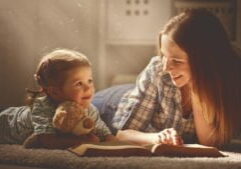
Relationships are crucial as well. Interacting with others regularly is seen to be a major key to a healthy retirement. Family relationships carry the most impact, particularly those involving grandchildren. When visiting with friends of the same age, avoid the temptation to compare ailments.
Instead of focusing on aging challenges, focus on the present moment and the peace that results. Early in life we all experienced a strong sense of curiosity. Re-kindling curiosity towards a spouse, as well as the changes which come with aging or life in general, can assist with living in the present moment.
Let us return to the topic feelings for a moment, as many emotions can arise as older friends suffer losses in their lives or die themselves. Bob and Sara had health issues which caused them to narrow their activities, which then altered their friendship contacts. However, they were able to talk about their upset and looked for creative ways to adapt, such as using Zoom to connect with friends. Sara also found it helpful to write down in her journal what she was experiencing and found this provided a sense of release.
Success in life, as in retirement, can be strongly bolstered by laughing often. this is the time of life where one has the time to really celebrate our sense of humour and sense of fun. Oh yes…and don’t forget curiosity.

Currently has a wait-list
Denis works with couples and individuals. His areas of interest include marriage, grief and stress. He also offers counselling to those who suffer from depression and anxiety symptoms.
Denis is eclectic in his use of psychological approaches, which include Adlerian, Cognitive/behavioural, existential and emotionally focused therapies.
Denis was a Clinical Assistant Professor of medicine at the University of British Columbia and also helped to create the first hospice program in B.C. in 1975.
Denis received his Master of Arts degree from the University of British Columbia in 1977 and works as a Registered Psychologist. He is a member of the College of Health & Care Professionals of BC (CHCPBC) and the B.C. Psychological Association.
Most importantly Denis has been married to Maureen for over forty-five years and they have four children and four grandchildren. Denis sees clients 19 yrs of age and older.